Just about every day, I will find a new article about CBD and the Endocannabinoid System and just recently, CBG. It is all very fascinating and it’s not uncommon for me to come up for air and realize I have spent a couple hours reading or watching some informational video. That’s usually when a dog gives me a nudge as if to say it’s time to get up and DO something. I will probably add to this list as I find more …
CBD Survey Results: Cultivating Wellness.
Project CBD releases the results of one of the most extensive CBD user surveys to date. In early 2019 Project CBD began collecting responses to a survey we designed to figure out who is using CBD, how and why people are using CBD, what kinds of products they are consuming, and whether or not CBD is working for them. The analysis in this report (available in its entirety here) covers an eight-month period and encompasses over 3500 responses. Find the results here.
CBD Guide: 12 Important Facts You Should Know Right Now.
Both consumers and entrepreneurs are intrigued by CBD, and both need to know more. CBD has become a craze but most people know little more about it than it comes from the hemp plant and it’s believed to be very good for your health. All types of brands are racing to get involved. CVS and Walgreens both recently announced plans to sell CBD products. Coca-Cola is said to be exploring the idea of adding CBD to their beverages. Even Oreos has jumped into the mix. Read the full article here.
CBD & Cannabis for Pets in Pain
A veterinarian’s advice on how to use cannabis to treat pain and inflammation in your four-legged companion
The state of veterinary medicine has advanced significantly in recent years and thanks to the availability of more effective medicine, many pets are living longer than they would have years ago. With age however, comes the onset of problems such as arthritis and other forms of pain and inflammation. Read the full article here.
17 States with Legal Cannabidiol (CBD) (as of July 12, 2019)
While 33 stated have legalized medical marijuana, the remaining 17 states have all passed laws allowing the use of cannabidiol (CBD) extract, usually in oil form, with minimal tetrahydrocannabinol (THC), and often for the treatment of epilepsy or seizures in seriously ill children. CBD, one of the 400+ ingredients found in marijuana, is not psychoactive. Read the full article here.
Cannabinoid Deficiency
Clinical Endocannabinoid Deficiency (CECD) is a condition where an individual produces a lower amount of cannabinoids than experts consider to be essential in the promotion of health, vitality, and well-being. Read the full article here.
The Endocannabinoid System: The Most Important System You’ve Never Heard Of
If you haven’t heard of the endocannabinoid system (ECS), or perhaps you have but you aren’t that confident in your knowledge of it, then don’t be embarrassed. Back in the 1960s, the researchers who became interested in the bioactivity of Cannabis eventually isolated many of its active compounds. It took another 30 years, however, for researchers studying animal models to discover a receptor for these ECS compounds in the brains of rodents – a discovery that opened a whole world of inquiry into why the ECS receptors exist and what their physiological purpose is. Read the full article here.
For almost 20 years, I have been feeding my dogs a raw diet. And interestingly, over the past 20ish years, it seems that many “dog food” companies have been creating formulas that are getting closer and closer to a natural diet for our dogs – raw meaty bones. When anyone asks me about feeding raw, I give them several references and tell them to do their own research before starting to transition their dog. The one reference I always give is the Raw Feeding group. This group originally started as a Yahoo Group and has migrated to Facebook. You can find them here: https://www.facebook.com/groups/rawfeedingcarnivores/ You will want to join and read for a few weeks. They also have a tons of great info under the Files link on the left. I have been a member of this group for as long as I have been feeding raw.
Here is a very good post that I wanted to share – it is a basic guideline to get you started:
1) quantity 2) proportions 3) types of meat 4) how to feed 5) transitioning to raw 6) what to avoid 7) when to feed 8) things you’ll notice 9) things to watch out for 10) cost
1) Quantity: Feed 2-3% of ideal adult body weight per day.
(eg: 25kg dog = 500g-750g, or 55 pound dog = 1.10 pounds – 1.65 pounds food per day). More for young, energetic, active dogs. Less for older, slower dogs. After a while you won’t have to measure and weigh everything – you’ll be able to judge by how your dog looks. (On a healthy dog you should be able to feel the ribs but not see them, except perhaps the last two on certain breeds, eg: greyhounds).
Note: Puppies need to be fed either 2-3% of expected adult weight or 10% of current weight (though this is not so precise), and pregnant and nursing bitches should be given as much quantity and variety as they want to eat.
2) Proportions: Feed: 80% meat + 10% bone (in the meat) + 5% liver + 5% other organ (kidney, lung, pancreas, brain, eyeballs, spleen, genitals, etc.) You don’t have to do this everyday. This should balance out approximately over the month.
Note: heart, skin, stomach and intestines (and sometimes lung) are fed as meat. Note: too much organ at once can cause diarrhea. Too much bone can cause constipation. You can add raw fish and whole raw eggs (including shell) occasionally. These will provide Omega 3 oils and Vitamin E which are beneficial to your dog. No veggies, fruits, grains or supplements of any kind are needed. (Dogs can get all the vitamins, minerals, proteins, fats and enzymes they need from raw meat)*. *If you don’t feed oily fish regularly or grass fed red meat, you can supplement with a good fish body oil (not liver oil) or salmon oil, one with no soy and minimal Omega 6 and no Omega 9; one that delivers 300mg EPA+DHA total (minimum) per serving.
3) Types of Meat: Feed whole animals as much as possible or appropriately sized portions of whole animals.
Feed whole chickens or chicken halves or chicken quarters, turkey legs or breasts, rabbits, lamb shanks or shoulder, goat or pork racks (ribs), shoulders, back, neck. beef heart, whole fish, etc., according to the size and requirements of your dog.
There is no danger of choking on large pieces of meat, but avoid smaller, swallow size pieces of meat, such as turkey necks that can be swallowed whole and stick in the throat. Dogs have no trouble crunching and digesting raw bones. Only cooked bones are dangerous. Meat can be offered frozen, cold or at room temperature. Even meat that has gone off (by our standards) is probably fine for your dog. (Think about how your dog can bury meat and dig it up weeks later and eat it). For convenience, freeze daily portions of meat in freezer bags. Take out of the freezer several hours ahead of feeding time to defrost. Give to dog.
5) Transitioning a dog to raw – don’t waste time converting slowly.
Get rid of the grains and give them raw meat right away. Older dogs can be switched ‘cold turkey’. No need for a slow transition, but it’s best to start with one kind of meat and stick with it until the dog has got used to the change. For example, start with chicken (take skin off if it causes loose stools) and introduce a new meat after a couple of weeks. Don’t give liver or other organs until your dog is used to the new meats.
Puppies can start on raw as soon as they are weaned, from 4-8 weeks. They can eat whole prey including bones and adapt more easily than mature dogs. (Raw meat is better for their steady growth and avoids sudden growth spurts caused by the carbohydrates in dry dog food, which is why dogs brought up on raw do not suffer the joint and bone problems of many other dogs).
Note: avoid letting your dog decide the menu. If your dog doesn’t like what you give him, put it away until the next meal, or the next, or the one after that. He won’t starve and will eat when he’s hungry. Eventually he’ll learn that you are the pack leader, not him, and he’ll eat what he’s given. If you give him what he wants every time, you’ll just make a fussy dog. If they absolutely refuse a meat, you can try lightly searing it or sprinkling some cheese on top until they get used to it.
6) What to avoid: Cooked bones / leg bones from large animals
Never give cooked bones – these can pierce and tear a dog’s intestine. Never give weight bearing bones from big mammals (eg: cow leg bones) as these can break teeth. (If you like you can scoop out the marrow with a spoon and give it to your dog). Avoid giving plain bones – always make sure it is hidden in the meat. Wild game (eg: wild boars, venison, possibly rabbit, wild salmon) should be frozen for 1-2 weeks to kill parasites. Human grade meat from slaughterhouses should be fine, but if in doubt, freeze first.
Never give ‘swallow size’ pieces of meat. Dogs do not chew their food, they crunch, break and swallow.
Check that the meat you give is not enhanced – no added salt (no more than 80 mg). Try to give ‘organic’ meat or meat that has not been treated with antibiotics as much as possible, though unfortunately this is way too expensive for most people.
7) When to feed: find what works best for you and your dog but no need to feed regular meals.
In the wild, wolves eat when they can. This may be smaller animals every day or so, or larger animals once every four or five days. Most or our dogs have got used to eating once or twice a day, but if a dog gets programmed to a rigid feeding schedule, he can start to vomit bile which he will produce in expectation of food. To avoid this do not feed according to a tight schedule. Vary the amount of food each day and the feeding times. Some people prefer to let their dogs self regulate. They allow the dog to eat as much as they can and then don’t feed them again until they are hungry, maybe two or three days later. These dogs tend to establish an ideal weight by themselves and never eat more than they need. Work out what works best for your dog.
Note: Feed puppies 3 times a day until they are 6 months, twice a day from 6 months and once a day after their first birthday (roughly – go by the dog). Pregnant and lactating bitches, as already stated, should eat what and when they want.
8) Things you will notice after switching to raw: Your dog will drink less water (meat is 60-70%+ water), and will poop far less than before (no wasted carbohydrates). This is normal.
Stools will vary according to diet – it won’t be the same every day. Loose stools are fairly normal and should not be confused with diarrhoea. They may change colour and consistency and occasionally contain mucus and bits of bone. Over time you’ll work out which meats suit your dog’s digestive system best.
Your dog will soon have better energy levels, but will also sleep better after meals. His coat should become shinier and he will get to a better weight. His immune system will be better so less need for medical interventions. His teeth will be cleaner and whiter and lose the tartar. He will develop better jaw and muscle strength. He will be much happier, and for the majority of dogs, switching to raw is like going to doggy heaven! He will not become more aggressive or prone to attacking other animals. This is a myth.
9) Things to watch out for: allergies and other problems.
99% of the time your dog’s pre-existing health issues and allergies will disappear when you switch him off a grain based diet and onto raw meat. Even dogs that are allergic to certain meats, are less likely to be allergic to that meat on a raw food diet. Many dogs on dry dog food diets that have allergies, clear up completely on a raw diet. However, if you see any of the following signs it may be worth changing meats to try and rule out possible allergens: constant vomiting or diarrhea, unwillingness to eat, lethargy, excessive blood in vomit or stools. If in doubt – see a vet.
10) Cost – it needn’t cost more than what you feed already.
If you shop around it’s usually possible to buy good meat for less or same price as you’ve been spending on dried dog food (kibble). Supermarkets sometimes have deals on certain meats, frozen meats, etc. but try to make sure they are un-enhanced with salt or additives. If you visit slaughterhouses or butchers and ask they may be able to give you free stuff, but don’t just rely on bags of fat and unwanted bones. Get organs and body parts that are not normally used. Some people prefer to rear their own meat (rabbits, chicken, etc.) for their dogs, while others are lucky enough to find road kill or hunt their own.
Written on July 28, 2018 – about a week after my surgery:
How I spent my summer vacation.
Hip resurfacing surgery (July 20, 2018) went well and I am now working on the recovery part. Hip joint now doesn’t hurt but the muscles that were cut are extremely angry. I am off the opioids (yeah!) and am moving slowly … but surely. Previous hip pain was sucking the life out of me and I am looking forward to getting my life BACK!!!
Written on January 25, 2019 – about 6 months after my surgery:
This is the surgery that I selected to have done to repair my very arthritic and painful right hip. It took lots of research to find Dr. Thomas Gross, an orthopedic surgeon in Columbia SC, who has performed over 5000 resurfacing surgeries. January 20 was my 6 month anniversary and I am not ashamed to admit that this surgery kicked my ass. Those first 6 weeks were very humbling.
In my follow up visit at 8 weeks, Dr Gross cleared me to start rehab, so Mike and I joined a local gym. I met with the trainer, we came up with a plan for my workout, and on my first visit, I hit the arc trainer (similar to an elliptical). I set the time to 10 minutes … on level 1 … and I was extremely light headed when I was done. Holy crap. Its a good thing that Planet Fitness is the “no judgement zone.”
Fast forward another 4 months. I am still mindful of my gait, but I am now walking pain free. My doctor said that after 6 months, I can start easing back into my sporting activities. Guess I was stretching the definition of “easing” because Darcy and I just finished three agility weekends in a row of traveling and trialing. All were fun, we were able to visit with friends and it was very evident that Darcy was very happy to be out running agility again. Because I was running with pain for several months and then we were out for over 10, we have a lot of work/training to do to be the amazing team we were becoming before my hip made other plans. I am now more determined to not only recover, but to be better, stronger, faster, and healthier than before, and considering the results of so many others who have had the resurfacing procedure, I think it is quite possible.
Stay tuned …
This was written on July 21 – one year after my surgery:
I was seated on the edge of the operating table wondering why there were nurses on either side of me holding my right and left arms. They smiled and one said “here you go … the best beach-side summer cocktail you have ever had”.
When I woke up, I was in a different room and another smiling nurse greeted me. “How are you feeling?”
“What? I don’t know. Wait, do I have a new hip??”
“Yep. You have a new hip”
That was one year ago. July 20, 2018.
Lisa, Darcy and Pippin at the Biltmore
In the last 365 days I have been humbled, frustrated, overwhelmed, encouraged, enlightened, amazed and determined. I had been walking so badly (due to the pain) for almost a year before my surgery that I really did have to learn to walk again, to find my gait again, to remember head up, shoulders back, one foot in front of the other, heel/toe … and no slouching. It took months to get there.
At 8 weeks, I had a follow up visit with my doctor, Dr. Thomas Gross, in Columbia, SC, and he asked me if I was glad I had had the surgery. At that point, I wasn’t really sure. When he asks me again, it will be a resounding yes. I am very thankful that we found the best doctor in the country who performed the hip resurfacing surgery that will hopefully be my one and only.
One year ago today, we were in this RV heading home from the hospital in Columbia. I was frail, vulnerable, overwhelmed and needy and tried to rest on the sofa while Mike drove the whole way home. I don’t say this enough, but I am so very grateful for Mike’s love, support and encouragement, even though I cursed him those first few days after we got home when he insisted that I get out of the chair and walk a little … and then a little more.
A year later, I am walking better, moving better and feeling better each day and hoping the effects of that beach-side summer cocktail never wear off 🙂
**About 7-8 months after my surgery, I was doing much better but still feeling stiff and was not moving as well as I thought I should be. My sister-in-law, Debbie, had just signed on with Zilis and insisted that I try the UltraCell CBD. I was very hesitant at first, but after using it for about 3 weeks, I definitely noticed a difference. I am also using the UltraICE product, which contains turmeric and other anti-inflammatory botanicals. The combination has been very helpful. Click here to learn more.
Two weeks after we picked up Pippin and two weeks before we lost Riley.
As I have continued to recover from my hip surgery (July 2018), I have been doing better each month, but I also felt like my whole body needed to be oiled. I was still really stiff to get up and start moving. In early March, my sister-in-law, Debbie Fisher, told me that I needed to try this great new CBD oil. Um no thanks, I said. I’ve tried CBD before and it didn’t work, I said. In fact, I said, I think I had an allergic reaction to it (elevated heart rate/tightening in the chest). Debbie said I don’t care – try it anyway. So I did.
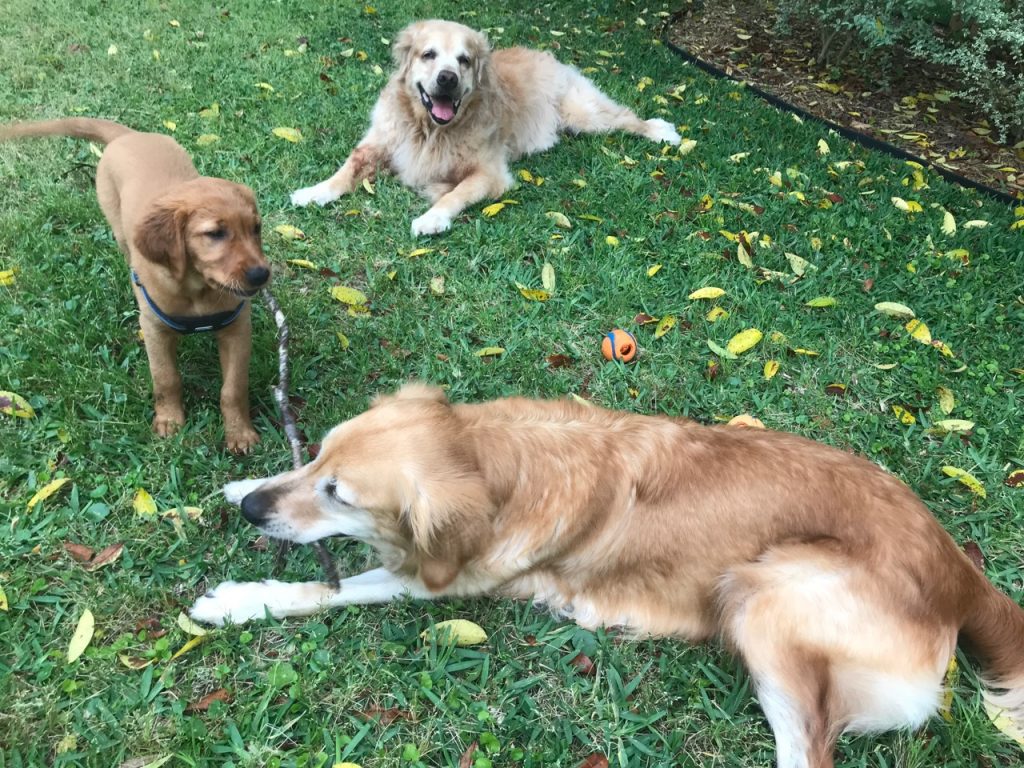
The next few months were a blur – in early April, I drove to Kansas to pick up Puppy Pippin (a “field” Golden Retriever) and then in early May, we had to say goodbye to Old Man Riley (a Golden Retriever just one month shy of 13). All the while I have been taking the Zilis Ultra Cell CBD. I think helped me stay sane during some tough moments. I KNOW it helped me feel less crusty – more oiled. Not 100% like I’m 20 again, but enough of a difference that I am hooked/sold/don’t want to stop.
So now that things have settled down a little, I am able to wrap my brain around the fact that I have signed on to sell an INCREDIBLE product and one that I would love to share with you – Zilis Ultra Cell CBD oil. This product is a FULL spectrum (over 400 compounds) CBD oil, and the bioavailability is off the charts – over 90% absorption! That’s HUGE and almost unheard of in the CBD industry. And recently it became the #1 selling CBD in the country. That’s amazing. You will not find it at Walmart or CVS. The company has chosen to sell through people like ME and YOU!
Attention DOG PEOPLE – this product has 0.0% THC and is safe for dogs … and cats … anything with a spine. We gave this to Riley to help with his seizures. It didn’t stop them, but we believe it lessened the severity and the frequency and we also believe he had a little more spring in his step because it was easing his arthritis. It’s also great for thunderstorm anxiety. And, Zilis just released a new product – Ultra Cell RAW – no sweeteners and no flavoring. PERFECT for our dogs and cats!! Click here for more information.